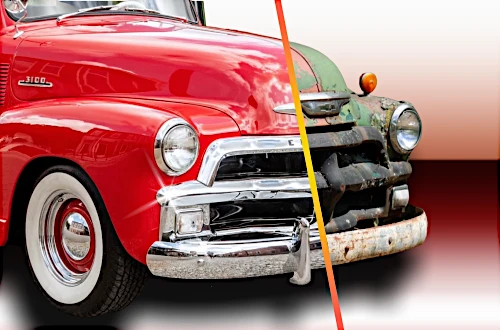
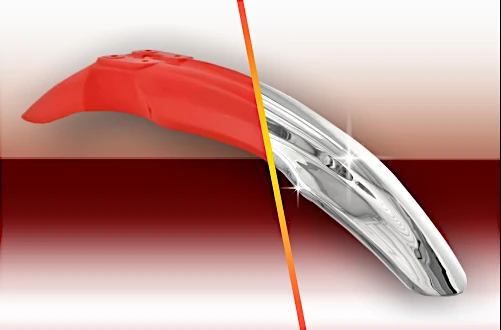
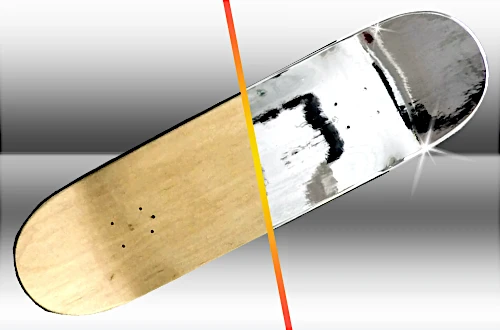
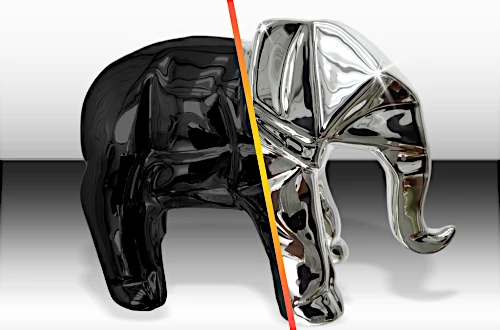
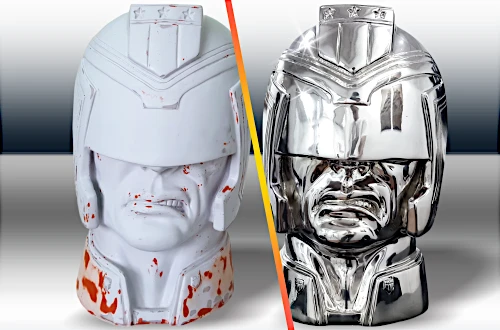
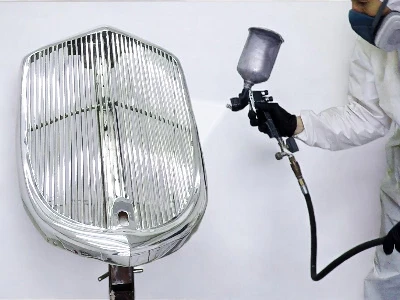
This paint is based on a set of components that, when applied in a specific order, deposit a metallic layer with a 100% mirror chrome appearance on any material.
This type of paint technology is also known as water chrome or hydrochrome, as its components are water-based. This makes it an efficient and versatile method to achieve an appearance identical to traditional chrome plating, without posing any danger to the user or the environment.
Chrome Finish on Any Material
Achieve a 100% mirror-like chrome finish applicable to any type of solid material, whether rigid or flexible. It can be used on common materials such as plastic, metal, wood, ceramic, glass, and more.
METAL
PLASTIC
WOOD
CERAMIC
RESIN
Chrome Effect Candy Colors
In addition to the chrome color, our systems allow for a wide range of chrome-effect candy colors that mimic precious metals such as gold, bronze, or copper, as well as any other metallic color.
When Are the Dyes Applied?
To achieve any desired color, you must start with the chrome or silver base. Then, by applying the color dye in the final layer of the process, you can choose the color of the final finish.
Our packages include three base color dyes: yellow, blue, and red. These can be applied directly or mixed to achieve any other possible color.
All our products include a technical support manual with video demonstrations of the entire process. You can also access a one-day in-person training session at our facilities with the purchase of any of our chrome systems.
Do You Offer Technical Support?
Our customers receive Unlimited and Non-Expiring Technical Support to ensure that we are with them throughout their entire process.
We offer various kits and application systems that include Splendor Chrome Paint supplies. The system you use will depend on the maximum size and quantity of objects you want to paint with a chrome effect. You can choose the appropriate application system for your needs from our product catalog.
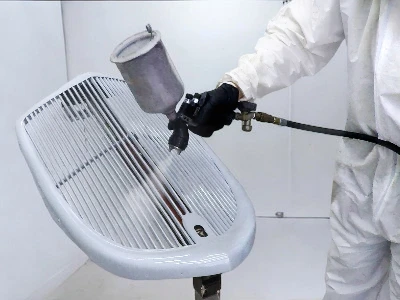
The video showcases the restoration process of a grille from a 1954 Chevrolet Pick Up, which was delivered to us completely damaged. The goal was to achieve a finish identical to the original chrome, which was impossible using common chroming methods since, once repaired, the object no longer has a metallic surface that allows for traditional chroming.
Mirror Copper Finish on 20" Truck Rims
In the video, the hydrochroming process is demonstrated with a 100% mirror-like copper finish on four 20-inch truck rims. Although the rims are made of iron, their age has led to the presence of filler on the surface to repair damaged and broken areas. The rims arrive with a gray primer coat, which serves as the starting point for the chrome process—ending in an impressive mirror-like copper effect.
Motorcycle Fender Chroming
The video shows the chroming process of a motorcycle’s plastic fender. The process begins with a plastic part that has been primed in a soft gray color. It is sanded and then coated with a polyurethane clear base coat. Once the base layer is dry, the chrome paint is applied. Afterward, compressed air is used to remove all moisture, and a final protective clear coat is added—completing the chroming process.
1934 Ford Grille Restoration
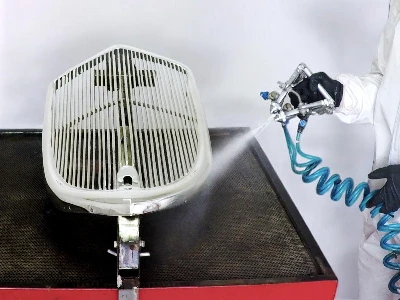
The video documents the restoration process of a 1934 Ford grille, which was delivered to us with metal filler and a gray primer coat due to multiple broken areas that had to be rebuilt. The goal is to achieve a finish identical to the original chrome, which is only possible with our chrome painting method. Traditional chrome plating is not viable in this case, since after the repairs, the surface is no longer fully metallic—making conventional chrome plating impossible.